
The Ultimate Cost & Setup Guide:
Moving a mobile home onto land is exciting until you realize the utilities aren’t ready yet. I remember helping a family member prepare their property before the permanent power connection was installed.
Everything from contractors’ tools to well drilling depended on temporary electricity.
That’s when we learned how important temporary electrical service is and how much planning it actually requires.
If you are installing a mobile home in North Carolina, temporary electrical service allows you to finalize the construction equipment, monitoring, and other necessary work that occurs before installing your permanent electric meter.
Understanding costs in advance avoids delays and unexpected fees.
What Is Temporary Electrical Service for a Mobile Home?
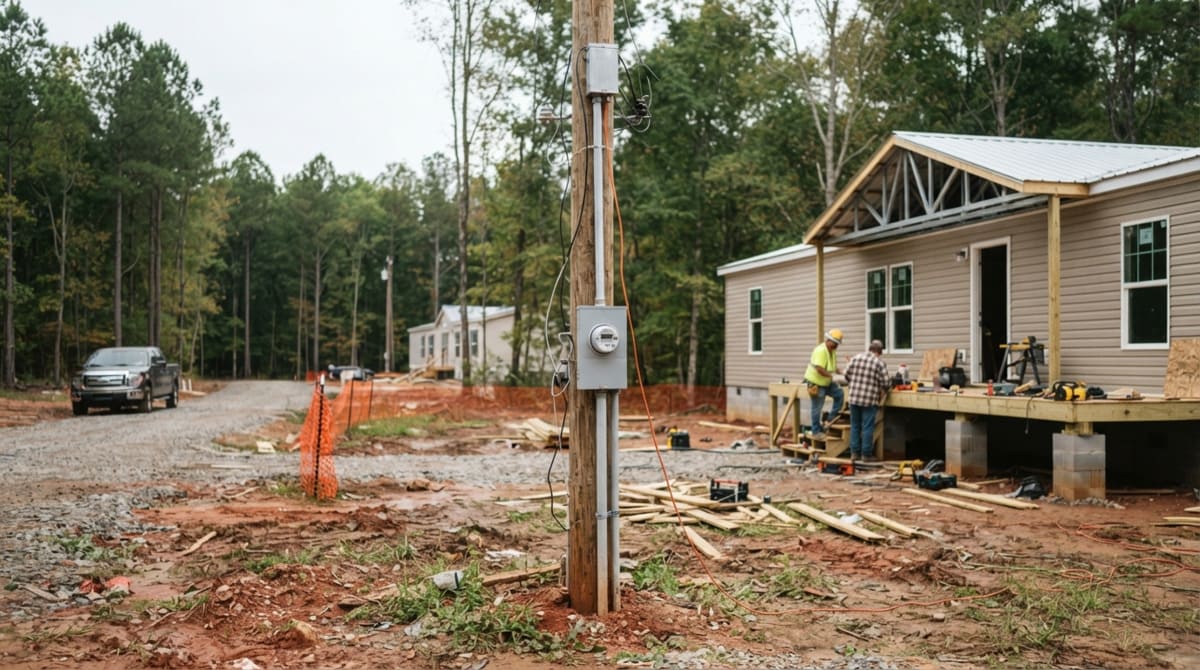
Temporary Electrical Service is a temporary power connection installed on your property before the permanent electrical service is approved.
For most mobile home projects in North Carolina, this service includes:
- Temporary power pole
- Meter base
- Weatherproof outlet panel
- Main breaker
- Grounding system
- Inspection before utility connection
Most homeowners use temporary service during:
- Mobile home installation
- Septic installation
- Well drilling
- Foundation work
- Skirting installation
- Interior finishing
Without temporary power, contractors often rely on generators, which can become expensive over several weeks.
Temporary Electrical Service Cost for Mobile Home in North Carolina
The total cost depends on your county, utility provider, electrician, and whether you’re renting or buying the temporary equipment.
Average Cost Breakdown
Service | Typical Cost |
Temporary power pole rental | $150 – $350 |
Purchase of temporary pole | $350 – $700 |
Meter base & electrical panel | $200 – $450 |
Licensed electrician installation | $400 – $900 |
County permit | $50 – $200 |
Electrical inspection | $75 – $150 |
Utility temporary connection fee | $50 – $250 |
Estimated Total Cost
Project Type | Estimated Cost |
Basic temporary setup | $700 – $1,200 |
Average residential project | $1,200 – $2,000 |
Large rural installation | $2,000 – $3,000+ |
The biggest factor is whether your property already has nearby utility access. If power lines are far from your lot, additional utility work may increase costs.
What Affects Temporary Electrical Service Cost in North Carolina?
Several things can change your final price.
Distance From Existing Utility Lines
If the utility company has to extend service, expect additional charges.
County Permit Requirements
Every county has slightly different permit fees and inspection schedules.
Some counties approve permits within some days, while others take over a week.
Rental vs. Buying Equipment
Many homeowners rent the temporary pole for short projects.
Buying makes more sense if construction will last several months or if you plan additional improvements later.
Electrician Labor
Labor rates generally vary from $75 to $150 per hour depending on the area and project complexity.
Soil Conditions
Rocky or difficult ground may increase installation labor when setting the temporary pole.
Getting power hooked up to the lot lets contractors start building; once your electricity lines are established, your next critical phase is organizing a how to install mobile home skirting in North Carolina.
Step by Step Process to Get Temporary Electrical Service
Once going this way, I realized that when the entirety is planned out, it becomes easier e.g.
Step 1: Obtain Required Permits
Visit your nearest county building branch and apply for electrical permits.
Step 2: Hire a Licensed Electrician
North Carolina generally requires installation by a certified electrician in order for utilities to insert temporary power.
Step 3: Install Temporary Power Pole
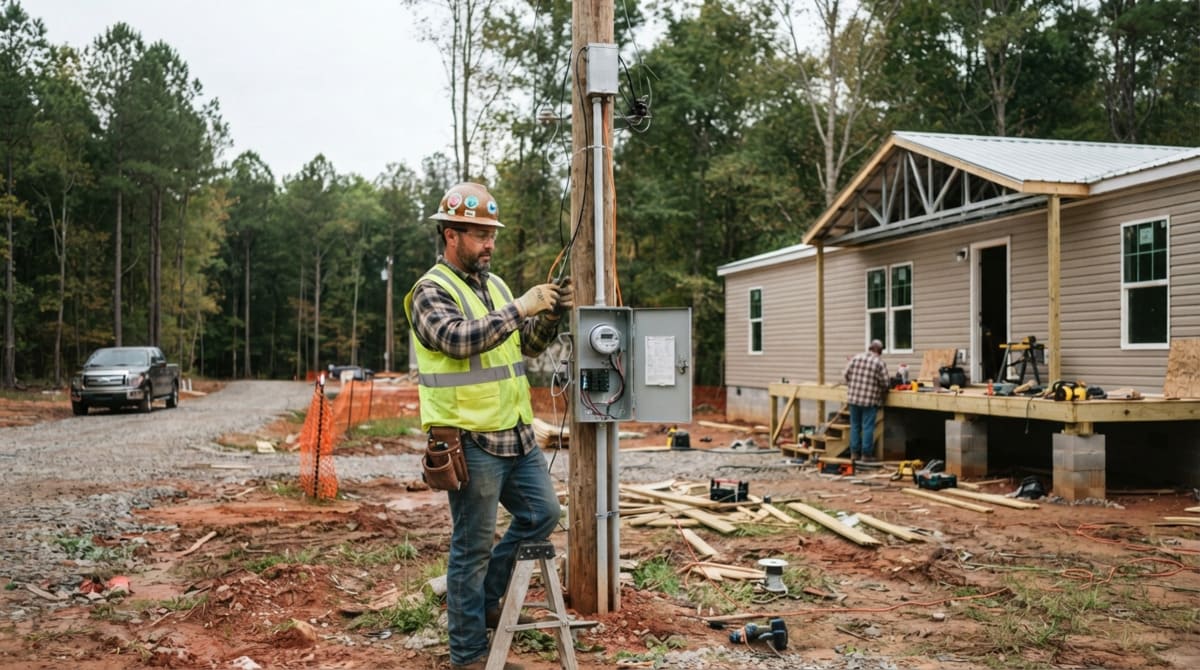
The electrician installs:
- Meter base
- Main disconnect
- Weatherproof receptacles
- Ground rods
- Temporary pole
Step 4: Schedule Inspection
The county inspector verifies that the whole thing meets the electrical code.
Step 5: Utility Company Connects Power
After approval, your provider installs the meter and energizes the temporary carrier.
Most projects take 1 to 3 weeks to finish, depending on inspection and utility scheduling.
Ways to Save Money on Temporary Electrical Service
There are a few lessons I learned that can reduce costs without cutting corners.
Bundle Electrical Work
If your electrician is already installing the permanent service later, ask for package pricing.
Schedule Early
Last minute requests often cost more due to emergency scheduling.
Compare Multiple Quotes
Getting three estimates usually reveals significant price differences.
Keep Inspection Ready
Failed inspections can delay your project and require additional service calls.
Ask About Equipment Rental
If construction only lasts a single month or two, renting a temporary pole can be much less expensive than buying one.
Before pulling main lines to your site poles, safety inspections must clear. You can review safety layout protocols via the North Carolina Utilities Commission Electric Division.
Many first time mobile home owners make these mistakes.
- Starting construction before temporary power is approved.
- Hiring an unlicensed installer.
- Forgetting county permit requirements.
- Underestimating project timelines.
- Not asking utilities about connection fees.
- Skipping inspection preparation.
Planning a little in advance usually saves both money and frustration.
Feature | Temporary Service | Permanent Service |
Purpose | Construction power | Long-term home electricity |
Duration | Short-term | Permanent |
Equipment | Temporary pole | Permanent meter base |
Cost | Lower upfront | Higher installation cost |
Utility Connection | Temporary | Permanent |
Frequently Asked Questions
How much does Temporary Electrical Service cost for a mobile home in North Carolina?
Most owners spend between $1,200 and $2,000, although simple installations can cost less and remote rural initiatives can exceed $3,000 as an addition.
Who installs Temporary Electrical Service?
The certified electrician typically installs temporary power poles, meter base, grounding system, and panel before the utility organization connects electricity.
Can I install temporary power myself?
Some property owners may allow electrical work to be performed based on local guidelines, however many utilities require installation and certification through an authorized electrician before energizing the service.
How long can temporary electrical service stay connected?
Most utilities allow temporary service when the build is energized. Once your mobile home passes the domestic final inspection, you will typically transition to a permanent electric service.
Does temporary electrical service include the permanent meter?
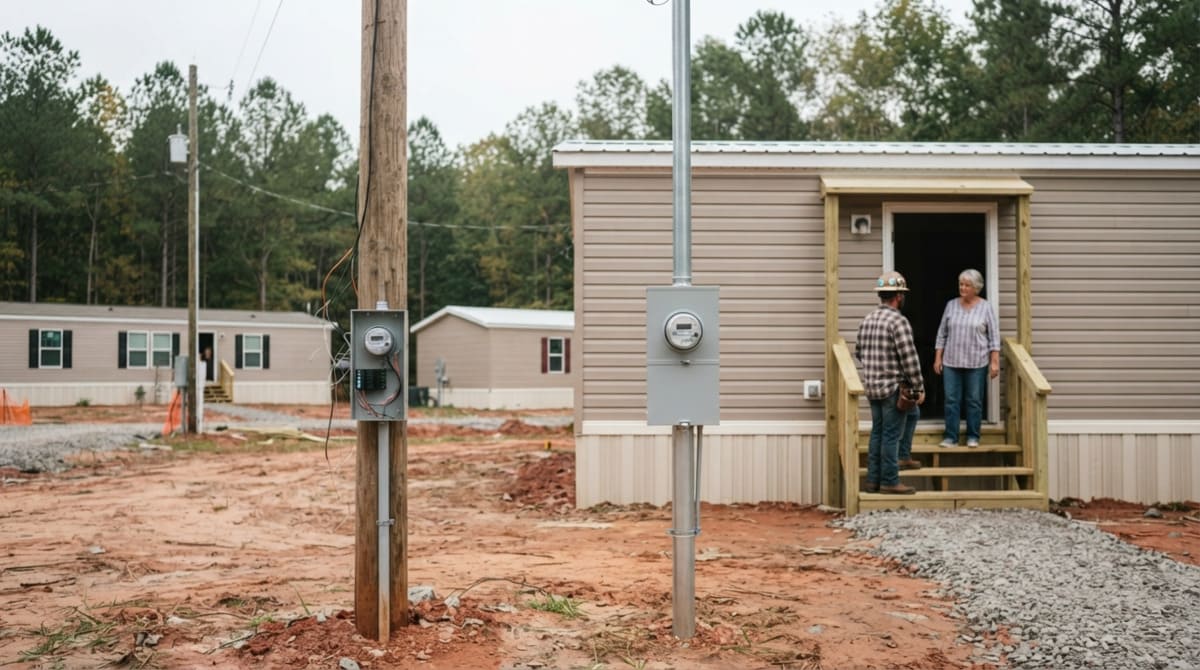
Nope, The utility enterprise typically installs a temporary meter first. After a final electrical inspection and approval from the provider, a permanent meter is installed.
Temporary electrical service may seem like just another item on your construction checklist, but relocating is one of the most important steps in getting your mobile home.
A well established temporary setup makes contractors more efficient, helps inspections stay on time, and reduces the need for costly generator leases.
If you are building or installing a mobile home in North Carolina, taking the time to compare estimates.
Understand your county permitting requirements, work with authorized electricians, and put a touch more effort into planning can save both time and money, making the transition to permanent power a lot smoother.