
Buying Repo Mobile Homes can be one of the smartest ways to own a home in North Carolina without paying full market price. A few years ago, my cousin and I spent weeks driving all over eastern North Carolina looking at repossessed manufactured homes.
On paper, every single deal looked like an absolute steal. But once we actually stepped inside a few of them, reality hit us hard. The rock-bottom price tag usually came with a catch.
Some places needed thousands of dollars in foundational repairs. Others, though, were complete hidden gems, clean, move-in ready, and priced way below market value.
If you are trying to hunt down a repo mobile home in North Carolina, you have to know the ropes. Finding the right deal takes more than just scrolling through online listings. You need to know where the best properties hide, how to spot costly damage, and which lenders will actually fund the purchase.
This quick guide breaks down the exact steps we learned the hard way. Follow these tips to protect your wallet and find a home that is truly worth your hard-earned money.
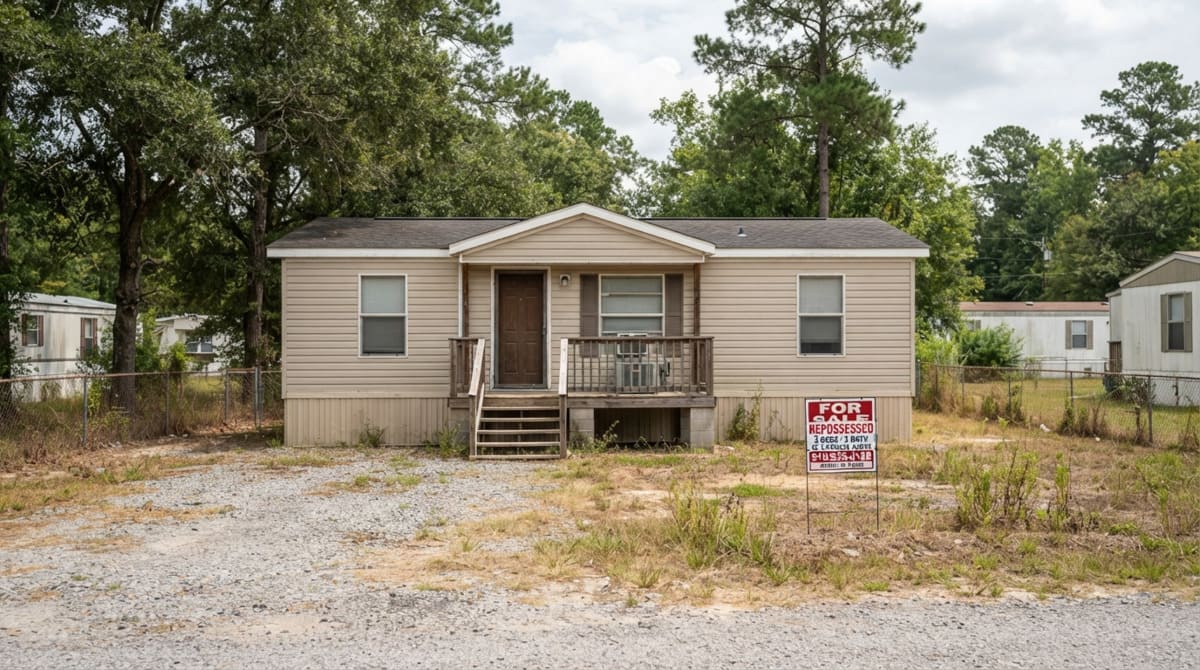
Step 1: Understand What Repo Mobile Homes Really Are
A repo mobile home is just a trailer that a bank took back. The last owner stopped paying their loan, so the lender repossessed it. Now, the bank wants cash fast. They sell it cheap to get their money back quickly.
Why Buyers Choose Repo Mobile Homes
Many buyers start with repo homes because they often cost less than traditional listings.
Some common benefits include:
- Lower purchase prices than market value
- Less competition compared to standard home listings
- Good opportunities for first-time buyers
- Potential to build equity through simple improvements
No two properties are the same. One might need fresh paint and a good scrub. The next could have a totally ruined roof, busted pipes, or a cracked foundation.
Never look at the listing price. Always add up the total cost of fixes first.
Where to Find Repo Mobile Homes in NC
North Carolina has repo mobile homes available through several reliable sources.
Popular places include:
- Bank-owned property listings
- Manufactured home dealerships
- Local real estate agents
- Online foreclosure marketplaces
- Credit unions offering repossessed inventory
Big cities like Charlotte, Raleigh, or Greensboro usually have the most listings. The same goes for Fayetteville, Wilmington, Asheville, and Jacksonville. More people live there, so more repos pop up.
But do not skip rural counties. They hide the cheapest deals. You have to drive a bit further out to find them.
Sourcing repossessed housing units provides an affordable option to enter property ownership with immediate equity.
If you want to bundle your home structure purchase alongside a permanent land location, look over our breakdown on mobile home and land packages: 7 steps to finance & buy in NC.
Step 2: Inspect the Home Before Making an Offer
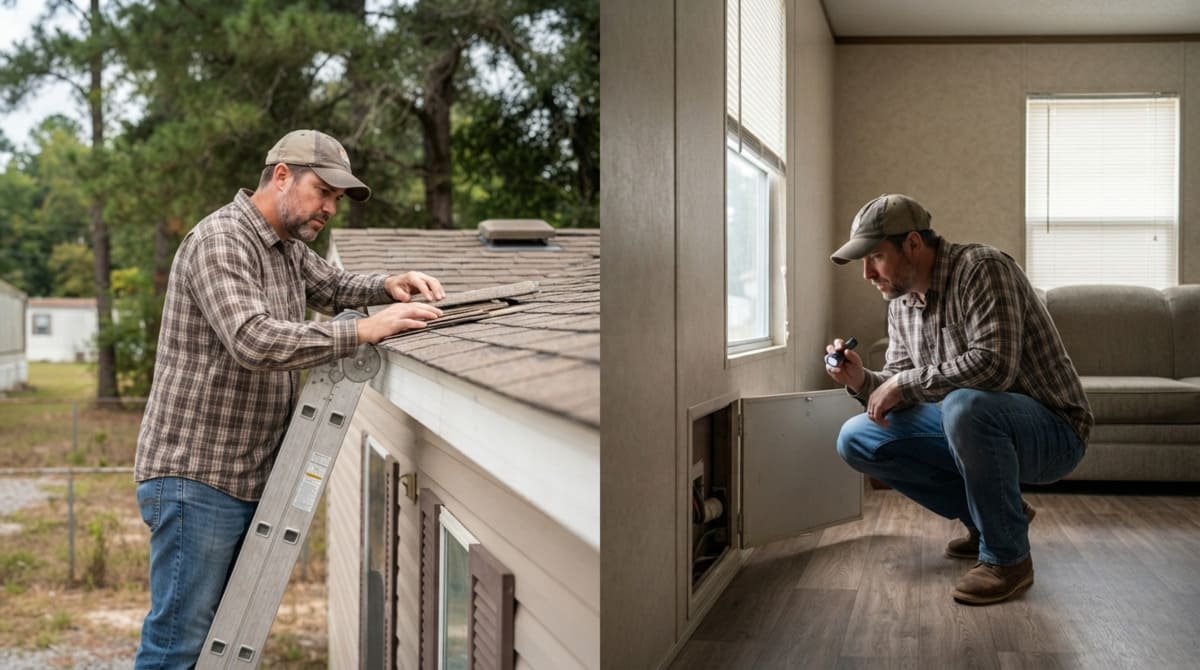
A cheap price tag can be a total trap. The biggest mistake buyers make is falling in love with a low number before they even look at the home’s actual condition.
Check the Structure First
Walk around both the inside and outside of the home.
Pay close attention to:
- Roof leaks or missing shingles
- Soft spots in the floor
- Cracks around doors and windows
- Water damage on ceilings
- Signs of mold or moisture
Even small issues can become expensive if they’re ignored.
Verify the Foundation and Utilities
In North Carolina, some repo homes are on permanent foundations. Others sit on leased park land. You must know exactly what you are buying.
Ask about:
- Foundation type
- Septic system condition
- Water connection
- Electrical service
- HVAC system age
Hire a licensed pro to check the place out. Make sure they actually understand manufactured homes. Spending a few hundred bucks right now can save you thousands in awful surprises later.
Compare Repair Costs Before Buying
Sometimes, paying a bit more upfront for a well-maintained home actually saves you a ton of cash in the long run.
Home Condition | Typical Buyer Cost |
Move-in ready | Higher purchase price, fewer repairs |
Minor cosmetic repairs | Good balance of value and cost |
Major structural damage | Lowest price but highest repair expenses |
Step 3: Secure Financing Before You Start Shopping
Many buyers assume every lender finances Repo Mobile Homes, but that’s not always true. The loan depends on the home’s age, condition, foundation, and whether you’re buying the land with it.
Compare Loan Options
Before making an offer, talk to at least two or three lenders. This gives you a better idea of interest rates and monthly payments.
Common financing options include:
- Conventional manufactured home loans
- FHA loans (for eligible homes)
- VA loans for qualified veterans
- Chattel loans for homes on leased land
- Local credit union financing
In North Carolina, buyers often find competitive financing through regional banks and credit unions that regularly work with manufactured homes.
Purchasing repossessed inventory from corporate liquidators requires verifying prior lien records and assessing past real estate tax obligations.
Review local asset accounting standards via the North Carolina Department of Revenue Property Tax Division.
Step 4: Research the Property and Neighborhood
A good deal isn’t just about the home. The location matters just as much.
Before closing, check:
- Property title and ownership history
- Annual property taxes
- Flood zone information
- HOA or mobile home park rules
- Distance to schools, shopping, and hospitals
NC Counties Worth Exploring
Some North Carolina counties regularly have affordable repo mobile home opportunities because of larger manufactured housing markets.
These include:
- Johnston County: Growing communities with affordable housing.
- Robeson County: Often offers lower-priced manufactured homes.
- Cumberland County: Popular around Fayetteville with steady inventory.
- Onslow County: Good option near Jacksonville for military families.
- Wake County: Higher prices but occasional bank-owned opportunities.
Buying in the right area can improve resale value while giving you better access to local services.
Step 5: Make a Smart Offer and Prepare for Closing
Once you find the right place, do not rush to sign the paperwork.
Read every page carefully. Check these things:
- Purchase price
- Repair agreements
- Closing costs
- Title transfer
- Insurance requirements
If the inspection uncovered problems, negotiate before closing. Many lenders selling repo properties expect buyers to negotiate based on repair estimates.
Common Mistakes to Avoid
Even pros miss things sometimes. Do not make these mistakes:
- Buying without a professional inspection
- Ignoring repair costs because the price seems low
- Forgetting to verify land ownership
- Not comparing multiple loan offers
- Skipping title and lien checks
Taking a little extra time during the buying process stops expensive surprises after you move in.
Frequently Asked Questions
Are repo mobile homes cheaper than regular manufactured homes in NC?
Often, yes. Most repo homes cost less because banks want their cash back fast. But you must add in repair costs to see the true price.
Can I get a mortgage for repo mobile homes?
Yes. You can get standard, FHA, VA, or chattel loans. It just depends on the home’s condition and if it sits on a permanent foundation.
Which North Carolina cities usually have more repo mobile home listings?
Look at the big hubs. Places like Charlotte, Raleigh, Greensboro, Fayetteville, Wilmington, and Jacksonville always have a ton more options than tiny, middle-of-nowhere towns. More people means more repossessions pop up on the market.
Should I hire a home inspector for a repo mobile home?
100% yes. Don’t skip this. A solid inspector catches the nasty stuff like hidden roof leaks, rotted plumbing, bad wiring, or jacked-up foundations way before you drop a single dime of your cash.
Can I negotiate the price of a repo mobile home?
Oh, absolutely. Banks hate sitting on empty property. If your inspector uncovers a bunch of ugly issues that need an immediate fix, you suddenly hold all the cards to haggle that price way down.
Final Thoughts
Buying Repo Mobile Homes in North Carolina is an awesome way to own a home without wiping out your savings. Just do not get blinded by a cheap price tag.
You need to inspect the place inside out, shop around for loans, check the neighborhood, and know exactly what you are signing before you hand over any cash.
From my experience, the people who end up happiest are the ones who take their time and do their homework. A smart, carefully chosen repo mobile home can give you years of comfortable living and actual long-term value.
It really is a solid choice for first-time buyers, retirees, or any family trying to secure an affordable place to call home.