
A Complete Guide Before Installation
Buying a mobile home can feel exciting until you reach the stage where the land is sitting empty, and you realize the real work starts before the home arrives.
I find that many homeowner awareness is most effective at home, and underestimate how important proper training is. A terrible foundation, poor drainage, or unfinished software work can lead to high priced problems later.
Good Site Prep for mobile home installation is the step that makes everything else easier. This type has its own challenges in North Carolina because soil conditions, climate, permitting, and local requirements can vary from county to county.
You want to have your land prepared before your mobile home delivery truck arrives. These 9 important steps will help you understand what to show off, what mistakes to avoid, and how to put together your NC property properly.
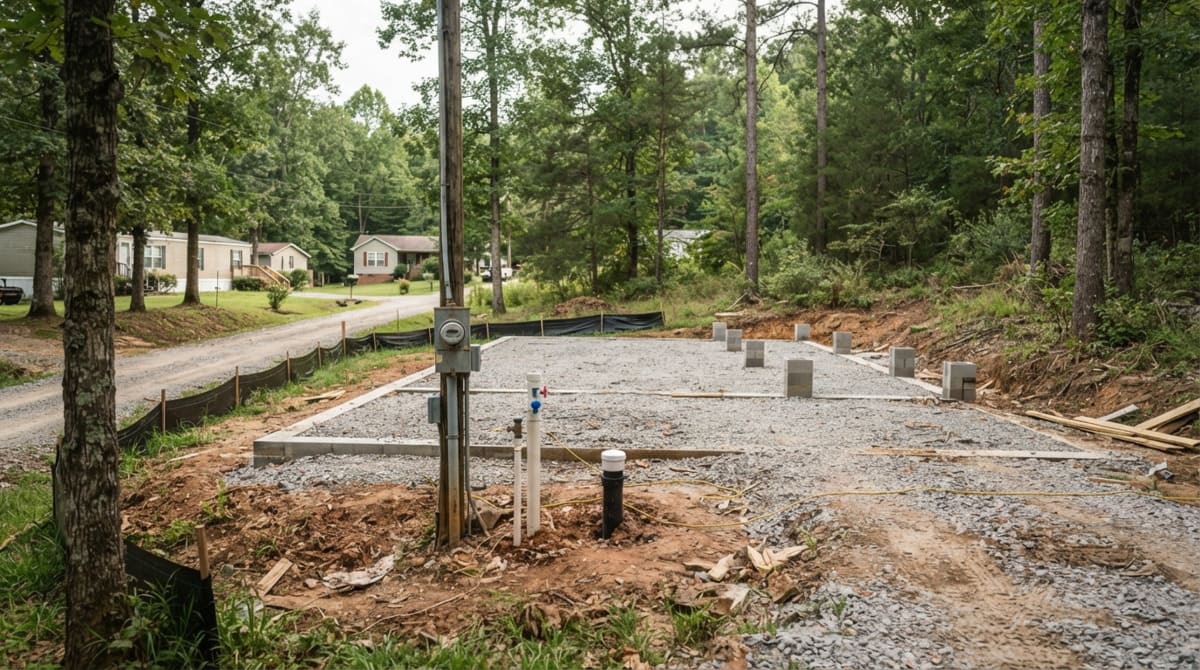
Understanding Mobile Home Site Preparation Requirements in North Carolina
Many people believe that site training is the most effective method to clear the bushes and level the dust, but professional instruction involves much more. A barn house needs a stable foundation, proper water changes, and safe connections to electricity, water and sewage.
North Carolina residences may have special demanding situations depending on proximity. Some areas may have additional clay heavy soil, just as others may address additional slopes or drainage troubles. Preparing effectively before installation saves cash and prevents future repairs.
Why Proper Site Preparation Matters Before Installing a Mobile Home in NC
A well prepared site helps your home stay level and protected for years. Poor preparation can lead to:
- Uneven floors inside the home
- Water collecting around the foundation
- Cracks caused by movement
- Delays during installation
- Extra repair costs
A common mistake I have noticed is homeowners rushing the dirt work because they want the home delivered quickly. Taking extra time during preparation usually prevents bigger headaches later.
Developing raw property requires a strict plan; before scheduling excavation machinery, make sure you evaluate initial structural budget constraints using our detailed overview on how much it costs to clear land in NC.
Step 1: Check Land Conditions and Complete a Site Evaluation
The first step is understanding what you are working with. Before bringing equipment onto your property, inspect the land carefully.
A professional site evaluation usually checks:
- Soil condition
- Land slope
- Drainage patterns
- Accessibility for delivery trucks
- Flood risk
- Utility availability
How Soil Testing Helps Mobile Home Installation in North Carolina
Soil testing is one step many buyers skip. While the ground may look solid, the soil can definitely shift after heavy rains.
A soil test enables you to determine whether or not your land can support the system you want for your mobile home.
Certain NC areas may require additional grading, gravel, or drainage improvements before construction can begin.
Step 2: Clear and Level the Mobile Home Placement Area
Once the property is evaluated, the next step is preparing the actual home location.
This includes removing:
- Trees
- Large rocks
- Old structures
- Brush
- Uneven ground areas
The goal is not just to make the land look clean. The area must be stable and accessible for installation crews.
Best Land Grading Practices for Mobile Homes in NC
Proper grading creates a slight slope away from the home so rainwater moves away instead of collecting underneath.
Many drainage problems happen because the site looks flat, but water naturally flows toward the home during storms.
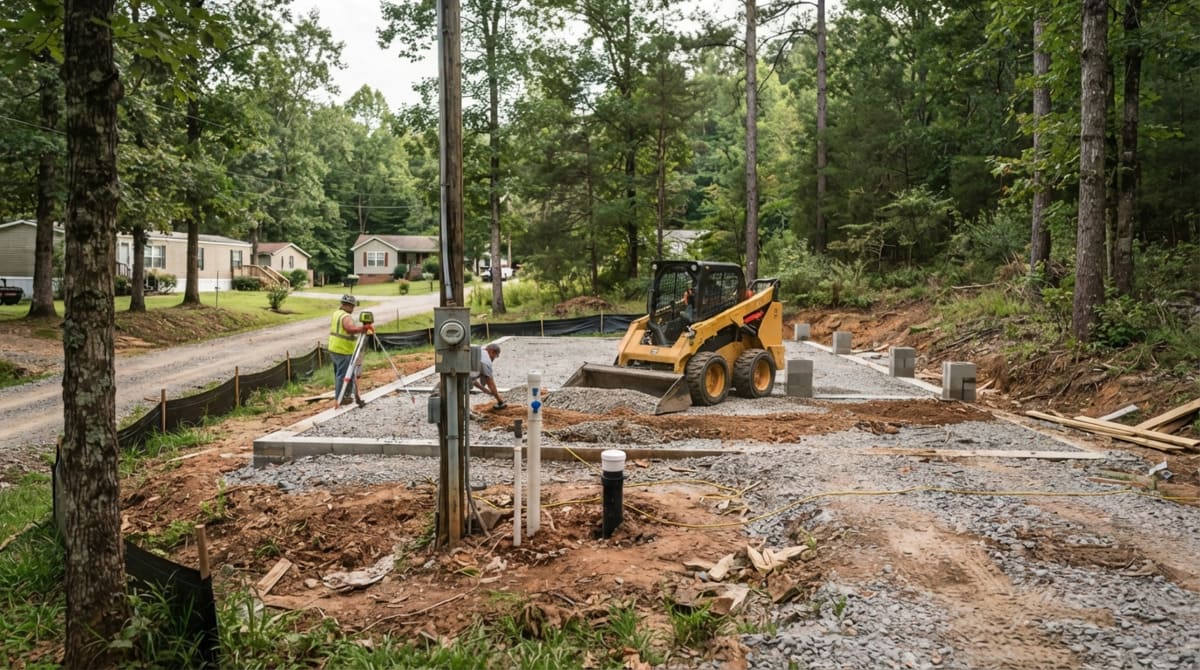
Step 3: Prepare the Foundation and Support System
The foundation is what supports your mobile home long after installation day.
North Carolina has different foundation requirements depending on the type of mobile home and local rules. Your installer or contractor can help determine the correct setup.
Common options include:
- Pier and beam systems
- Permanent foundations
- Concrete pads
- Manufactured home foundation systems
Choosing the Right Foundation Type for a Mobile Home in NC
The cheap option is not always the best. A foundation should match:
- Soil conditions
- Home size
- Local regulations
- Long term plans
A stronger foundation may cost more initially but can provide better stability and value.
Failing to properly handle local drainage slope regulations can halt your home delivery. Always confirm property development compliance directly with the NC Department of Environmental Quality Land Resources Division.
Step 4: Plan Utility Connections Before Delivery
One mistake many first time mobile homeowners make is to wait until they’re home before considering utilities.
Before installation, plan for:
- Electrical connection
- Water supply
- Septic or sewer connection
- Gas lines, if needed
Preparing Water and Sewer Connections for Manufactured Homes
If your property uses a septic system, it may require approval and inspection before installation.
For rural NC properties, septic planning is especially important because not every piece of land is immediately ready for a home.
Every county can have different rules. Before starting major work, check with your local building department.
You may need permits related to:
- Foundation work
- Electrical connections
- Plumbing
- Septic installation
- Land development
Why Checking NC Mobile Home Installation Rules Early Saves Money
Starting a work without proper approval can create delays and additional costs.
Short communications with local authorities or with your installer can pre-empt troubles.
Water is one of the biggest enemies of any manufactured home.
A good drainage plan may include:
- Grading
- French drains
- Gutters
- Downspout extensions
- Gravel areas
Preventing Water Problems Under a Mobile Home in North Carolina
Excessive rainfall is common in many NC areas, so management is critical.
A properly maintained site continues moisture away from induction and minimizes long term losses.
Your home needs a safe path from the road to the installation area.
Check:
- Road width
- Tree branches
- Turns
- Soft ground
- Temporary access issues
Large transport vehicles need enough space for proper transport.
Common Delivery Mistakes Homeowners Make
Some homeowners prepare the home area but forget about the driveway or entrance route.
A perfect site does not help if the transport truck cannot reach it.
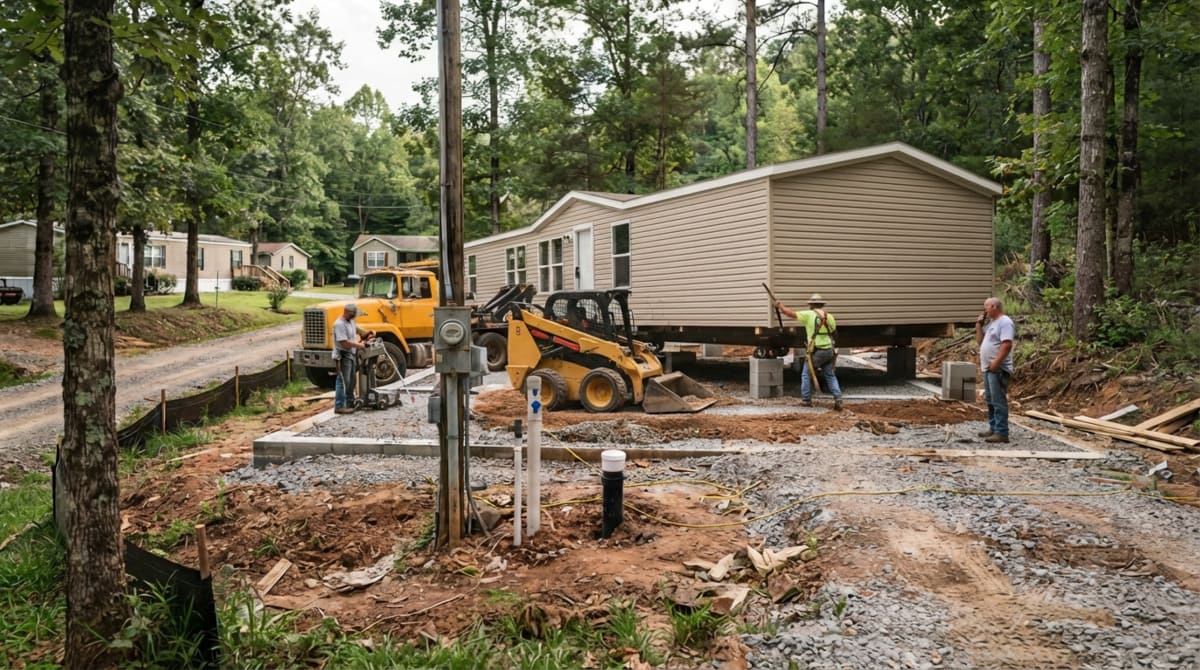
Once the site is ready, the installation team can place the home.
The final process usually includes:
- Positioning the home
- Connecting utilities
- Leveling the structure
- Completing exterior work
- Final inspections
Why Final Inspection Matters After Mobile Home Setup
Inspections help confirm that everything meets safety standards before you fully move in.
This is also the right time to identify small issues before they become expensive repairs.
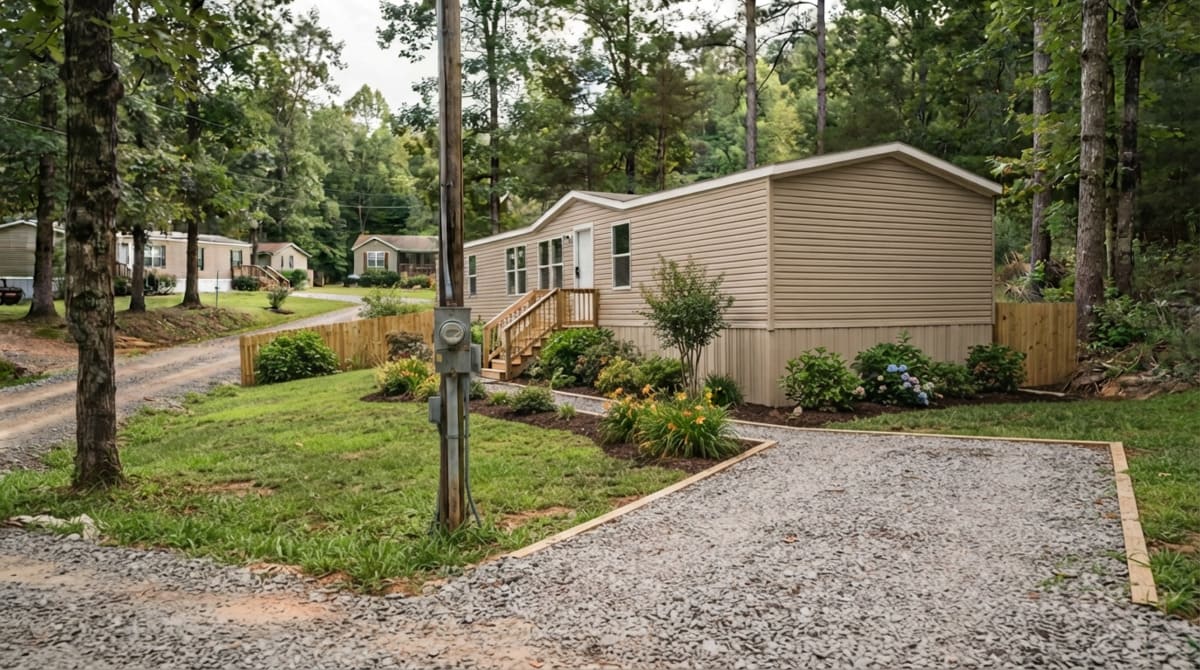
After installation, many homeowners complete additional improvements.
These may include:
- Landscaping
- Driveways
- Steps and porches
- Skirting
- Outdoor drainage improvements
Making Your Mobile Home Site More Comfortable and Valuable
A properly finished site improves appearance and makes daily living easier.
Small upgrades around the home can also improve the overall property experience.
Avoid these mistakes:
- Skipping soil evaluation
- Ignoring drainage planning
- Choosing the cheapest contractor without checking experience
- Forgetting permit requirements
- Preparing too close to delivery date
A little planning before installation can save weeks of stress later.
Frequently Asked Questions About Mobile Home Site Preparation in NC
How much does mobile home site preparation cost in North Carolina?
The cost depends on land condition, grading needs, foundation type, utilities, and local requirements. A simple site may cost less, while difficult terrain can require additional work.
Do I need a permit before preparing land for a mobile home in NC?
Many projects require permits depending on the county and type of work being completed. Always confirm requirements before starting major preparation.
How long does mobile home site preparation take in North Carolina?
The timeline depends on the property. Clearing, grading, foundation preparation, and utility work can take anywhere from several days to several weeks.
Can I install a mobile home on any land in North Carolina?
Not every property is immediately suitable. Soil, zoning rules, access, drainage, and utility availability all affect whether a mobile home can be installed.
What is the most important part of mobile home site preparation?
A stable foundation and proper drainage are two of the most important factors because they directly affect the safety and long term condition of the home.
Preparing the land for a mobile home in North Carolina is more than just clearing the area and waiting for delivery. The right preparation creates a safer, more comfortable home and helps avoid high value issues later on.
From checking soil conditions to creating a plan and draining utilities, topics every step of the way. When your site is organized properly, the installation process will be much simpler and you have a more powerful foundation for the future of the mobile home.